| |
Food Safety with Ceramics
Click for more information on:
Equipment Safety • Glazes & Oxides • MSDS
Sheets
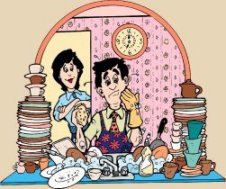
We suspect that the very first human-made clay objects were cooking or eating vessels, or maybe water jugs. Nothing matches ceramic kitchenware for economy, durability, and flexibility of design and color. Here are a few guidelines for making, choosing and using ceramics in your kitchen.
- For a ceramic piece to be "foodsafe", all surfaces that come into direct contact with food or drink must have smooth, unbroken glassy surfaces, without cracks, rough spots of texturing that water, juices or oils could penetrate. Such flaws can be havens for bacterial growth.
- It is not uncommon, however, to see bands of unglazed clay on the outsides of handmade mugs, or unglazed rings at the bottom of plates and bowls. These bands do not compromise the ware's foodsafe status.
- Do unglazed areas on your ware come in contact with food or drink? For pieces made from lowfire clays, any surface that comes in contact with food or drink must be covered with a foodsafe glaze that has been correctly fired in order to be considered foodsafe. Even when fired, lowfire clay remains porous enough that fluids may penetrate the surface and soak into the clay. Unglazed surfaces of pieces made from midrange (stoneware) and highfire clays may be considered foodsafe when fired to their full maturity because the clay particles vitrify enough - they melt together enough - to form a waterproof surface.
- Some glazes are soluble in the presence of certain foods. When glazes dissolve, their ingredients may be slowly released into the food which could potentially harm the person eating it. Most glazes leach faster in acid solutions such as orange juice, but others may dissolve faster in contact with alkaline foods such as certain green vegetables.
Many factors increase glaze solubility including composition of the glaze, small amounts of certain impurities, heating and cooling cycles during firing, fumes from other glazes fired in the kiln and more. Certain pre-mixed glazes are sold as "lead-safe", meaning they are not expected to leach lead or cadmium into food if the application and firing of the glazes are done properly. However, over- or under-firing, application over an unsuitable under-glaze (eg. one containing copper), the migration during firing of small amounts of clay impurities into the glaze and many more factors can render a "lead-safe" glaze hazardous.
Potters should also be aware that not only low-fire lead glazes are hazardous with food. High-fire glazes can leach dangerous amounts of barium, lithium and other toxic metals.
The best solution is to use glazes which contain no toxic metal-containing ingredients. These safer glazes rely on glaze chemicals containing sodium, calcium and magnesium fluxes. If other glazes are used, the item must be labelled with a permanent fired decal indicating it is for decorative purposes only, and not to be used with food.
- If you observe that any glaze on your piece changes color during or after contact with food or drink, do not use it with food or drink again.
- Raku glazes are never foodsafe, even if fired in electric kilns, because of their high metal content. Raku glazes are also rarely watertight.
- Some pieces that meet the glaze standards may still not really be safe for use because of hollows, pits or holes in the clay itself, under the glaze. It's not uncommon to find small depressions inside moldcast mugs where the handle meets the body, or holes in the clay at the bottom of plates where the clay was poured into the mold. These holes may - or may not - have been filled and sealed by the glaze. You'll need to take extra care in cleaning these flawed pieces if you choose to buy them. We've heard some real horror stories about what people have eventually found in (or coming out of) these flaws.
- Ceramic pieces with gold, platinum, or other "pure metal" decorations are almost never microwave-safe.
- Some ceramic pieces are microwave-safe, and some are not. It depends on the amount and type of metals used in the clay and glaze, and the power of your microwave oven. The only way to be sure is to test each piece in the microwave. Fill it with water and zap it for 30 seconds at a time. Watch for sparks from the ceramic piece - a clear indication there's too much iron! Handling the piece carefully, check for hot spots and to see how much the clay has heated up. If you find uneven hot spots, or the piece as a whole seems excessively hot compared to the water inside, it's not microwaveable.
- Don't put cool ceramic pieces into hot ovens. Put the filled dish into the oven, turn the oven on, and allow about 10 minutes extra baking time compared to the recipe instructions. Allow the ceramic piece to heat up with the oven to minimize the risk of breakage.
|


 Portland Follow Us!